
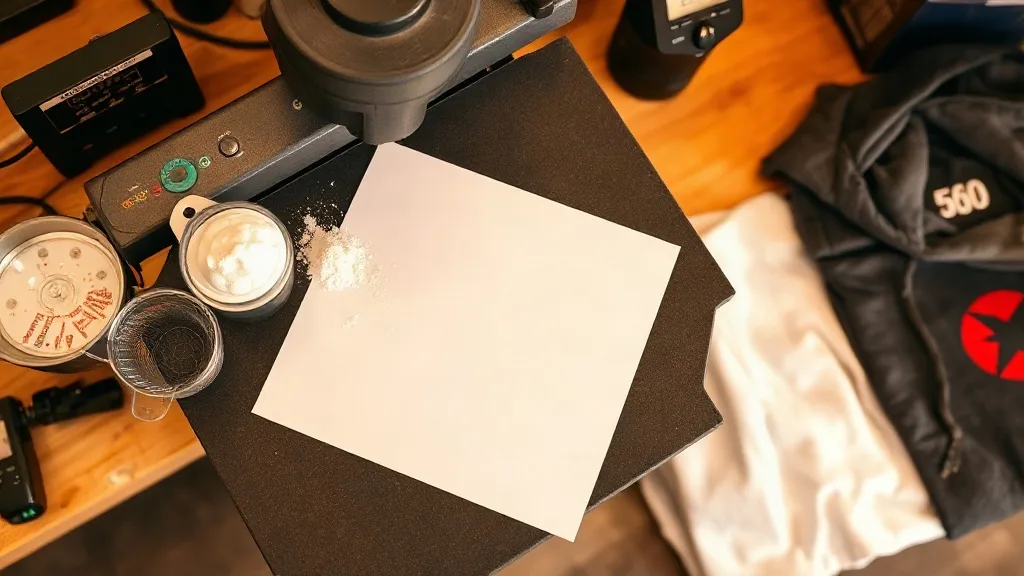
If you run a small print shop, you have probably had a customer walk in with a phone screenshot of a full-color design and ask for three shirts by Friday. Screen printing that job means burning screens and mixing inks for a run that will never pay for the setup. Vinyl means weeding a nightmare. This is exactly the gap where dtf transfers earn their place in a shop, and it is worth understanding them properly rather than treating them as a fallback for jobs you do not want.
Direct-to-film printing works by printing a design in reverse onto a coated PET film using water-based pigment inks, then dusting the wet ink with a hot-melt adhesive powder. The powder fuses to the ink under heat, and the result is a thin, stretchy transfer that can be pressed onto cotton, polyester, blends, and even some nylon. No weeding, no color separation, no minimum order. Once you understand the variables, the process is remarkably forgiving. Once you ignore them, it fails in ways that look like the transfer's fault when it usually is not.
Why DTF Fits the Way Small Shops Actually Work
Most shops under a certain size live on short runs and mixed orders: twelve hoodies for a team, six shirts for a bachelor party, one-offs for a walk-in. The economics of traditional decoration punish that mix. DTF flips the equation because the per-unit cost stays flat regardless of quantity, and the same film handles a one-color logo and a photographic gradient without any change in setup.
There is a second advantage that rarely gets mentioned: storage. A printed DTF sheet or roll can sit on a shelf for months and be pressed the day an order comes in. You are not committing to a screen or a color mix for a design that might sell twice. For shops that sell online or take preorders, that flexibility is worth more than the raw material savings.
Where DTF Stops Making Sense
Be honest with customers about the limits. Large runs of a single simple design will almost always be cheaper and softer through screen printing. Designs that need to survive industrial washing at high heat, or garments that will be worn against sensitive skin in large flat areas, deserve a conversation about feel. DTF transfers have a slight hand to them, and while modern films and lower powder coverage have improved this a lot, it is not the same as a properly printed water-based screen print.
The Variables That Decide Whether a Press Goes Well
Almost every DTF failure I have seen traced back to one of four things: moisture, pressure, temperature, or timing. Get those right and the process becomes boring, which is what you want in production.
Film and Powder Choices
Coated film quality varies enormously. Cheaper film tends to curl, release inconsistently, or leave a hazy residue around the edges of the design. If you are printing in-house, match your film to your ink set rather than chasing the lowest price per sheet. For powder, finer mesh adhesive gives a softer finish and works better on detailed artwork, while coarser powder grips heavier ink loads on bold designs. Shaking off excess powder properly matters more than most operators expect; leftover powder cures into a rough, plasticky border that customers notice immediately.
Press Settings That Actually Hold Up
A reasonable starting point for a standard heat press is around 150 to 160 degrees Celsius for 10 to 15 seconds with medium to firm pressure, then a cold peel once the film has cooled enough to touch. Cold peel generally gives cleaner edges and a softer feel than hot peel, though hot peel is faster for high-volume work. Always run a test press on the actual garment you are decorating. A 100 percent cotton tee and a 50/50 hoodie behave differently, and a coated polyester jacket can scorch or show press marks if you push the temperature too high.
Pre-pressing the garment for a few seconds before applying the transfer removes moisture and wrinkles, and it is the single step most often skipped by people who then complain about adhesion. If you are pressing over seams, zippers, or pockets, use a pressing pillow so the pressure stays even across the surface.
Peel and Second Press
After the cold peel, a short second press of five to seven seconds with a cover sheet or parchment protects the design and improves wash durability. This step also flattens any slight texture from the powder. Skipping it is fine for samples but a bad habit for orders that will be worn and washed repeatedly.
Buying Transfers Instead of Printing Them
Not every shop wants to invest in a printer, shaker, and oven. Buying ready-made transfers from a supplier is a legitimate model, especially for shops that are still testing demand or that lack the space for powder handling. The trade-off is turnaround time and per-unit cost, and the quality depends heavily on the supplier's film and powder discipline.
When you are evaluating a supplier, order a small sample set first and press it yourself rather than judging the print on the sheet. A transfer that looks crisp on film can crack after two washes if the powder was under-applied. Ask what film they use, whether they cold peel or hot peel, and what wash testing they have done. Suppliers who can answer those questions specifically are usually the ones worth keeping.
If you are searching for dtf transfers near me to shorten lead times, prioritize local pickup or fast domestic shipping over the cheapest per-sheet price. A rush order that arrives late costs more than the difference in material cost, and having a supplier you can call about a bad batch is worth a premium.
Pricing the Work Without Losing Money
DTF pricing trips up a lot of shops because the material cost looks trivial and the labor cost hides. A realistic per-unit price has to cover film, ink, powder, the garment, the press time, and the design handling. On a small transfer, materials might land in the range of a dollar or two, but the press operator's time does not scale down with size.
A workable approach is to set a minimum order value rather than a minimum quantity. A single shirt with a complex full-color back print still takes setup, trimming, pressing, and a second press. Charging a flat minimum protects you from the customer who wants one shirt at a price that assumes a hundred. For repeat orders of the same design, you can lower the price confidently because the setup is already done.
Common Failures and What They Mean
- Edges lifting after washing: usually insufficient pressure or a cold spot on the platen, not bad film.
- Cracking across the design: under-cured powder or too little pressure during the transfer press.
- Hazy residue around the print: excess powder that was not shaken off before curing.
- Design peeling in one corner: garment moisture or a seam that prevented even contact.
- Stiff, rubbery feel: heavy ink laydown combined with coarse powder; try a finer adhesive or reduce ink coverage.
Keeping a simple log of press temperature, time, pressure, garment type, and result will save you hours. After a few dozen jobs you will have your own settings for the garments you actually sell, which beats any generic chart.
Frequently Asked Questions
Can DTF transfers go on polyester and nylon?
Yes, and they often perform better on synthetics than vinyl does because the transfer is thin and stretches with the fabric. The main risk is heat: polyester can scorch or show press marks at higher temperatures, so drop to around 140 to 150 degrees Celsius and test on an offcut or an inside hem first.
How long do DTF transfers last in the wash?
A properly pressed transfer on a compatible garment typically holds up for dozens of wash cycles when washed inside out in cold or warm water and tumble dried on low. Heat and abrasion are what break it down, so telling customers to avoid high dryer settings does more for longevity than any product claim.
Do I need a special heat press for DTF?
A standard clamshell or swing-away heat press with adjustable pressure and a reliable temperature readout works fine. The one upgrade worth considering is a press with even platen pressure, since uneven pressure is the most common cause of partial adhesion. A separate press for transfers is nice for workflow but not required.
Is it worth printing DTF in-house or should I order transfers?
Print in-house if you handle steady volume, want same-day turnaround, and have space for powder handling and ventilation. Order from a supplier if your volume is unpredictable, your space is tight, or you want to test demand before investing. Many shops start by ordering and move to in-house once the work justifies it.
What is the difference between DTF and DTG?
DTG prints directly onto the garment, which limits you to compatible fabrics and often requires pretreatment. DTF prints onto film and transfers the result, so it works across a much wider range of materials and lets you stock printed designs ahead of time. DTG can feel softer on 100 percent cotton, while DTF is more versatile across blends and synthetics.
The short version: treat dtf as a production tool with its own rules, not as a magic shortcut. Learn your press, log your results, buy film and powder you trust, and price the labor honestly. Do that and the process quietly becomes one of the most reliable things in your shop.