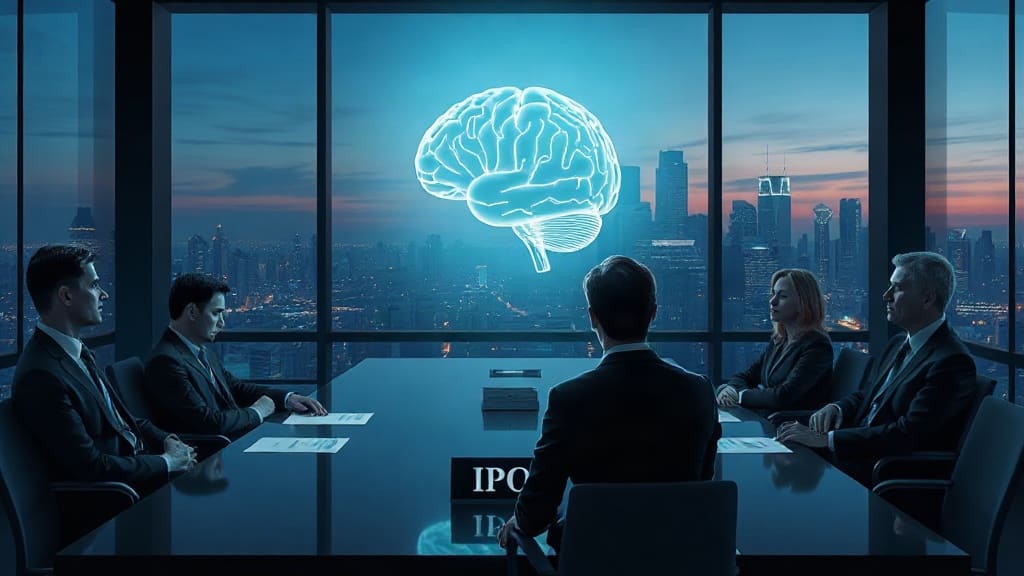
Anthropic has long positioned itself as the responsible AI company. Founded by former OpenAI researchers who wanted a more cautious approach, the startup built its brand on safety and alignment. But as it prepares for what could be one of the biggest tech IPOs in years, that carefully crafted image is colliding with a blunt reality: the technology it is racing to commercialize could, in the wrong hands or with the wrong safeguards, pose existential risks. The phrase AI could kill all humans has moved from science fiction to boardroom discussion, and it is now part of the public debate around Anthropic’s future.
The tension is not new, but it has intensified. Anthropic has consistently said it prioritizes safety over speed. Its constitutional AI approach and extensive red-teaming are meant to reduce the chance of catastrophic outcomes. Yet the company is also burning cash at an extraordinary rate, and an IPO is the most direct way to raise the billions needed to keep building frontier models. That financial reality forces a question: can a public company, answerable to shareholders every quarter, truly keep safety first?
The origins of Anthropic’s safety-first brand
Anthropic was founded in 2021 by Dario Amodei and Daniela Amodei, siblings who had previously worked at OpenAI. They left amid disagreements over how aggressively to pursue commercial AI development. Their new company’s mission was explicit: build AI systems that are helpful, harmless, and honest. The name itself, a reference to the anthropic principle, signaled a focus on human values.
From the start, Anthropic invested heavily in research on AI alignment, the field dedicated to ensuring AI systems do what humans intend. It developed techniques like constitutional AI, where a model is trained to follow a set of principles rather than just imitate human feedback. This approach, the company argued, made its models less likely to produce harmful or biased outputs. The Claude series of models became known for their thoughtful, safety-conscious responses. For many developers and enterprises, Claude was the safe choice.
That reputation attracted investors who wanted exposure to AI without the perceived recklessness of some competitors. Amazon invested $4 billion, Google put in $2 billion, and venture capital firms poured in more. By 2024, Anthropic was valued at over $18 billion. But the safety-first image also created expectations, expectations that are now being tested as the company moves toward public markets.
The IPO and the financial pressure
Anthropic has not officially announced an IPO date, but reports suggest it is working with banks and could file as early as 2025. The company needs money. Training frontier models like Claude requires enormous computing power, and the competition with OpenAI, Google, and Meta is relentless. In 2024 alone, Anthropic reportedly burned through more than $2 billion. An IPO would give it access to public capital and a currency for acquisitions. It would also make early investors and employees very wealthy.
But going public changes the calculus. A public company must report quarterly earnings, face analyst scrutiny, and answer to shareholders who may not share the founders’ long-term safety vision. The pressure to grow revenue and cut costs can push even well-intentioned companies toward riskier behavior. For an AI lab whose core product could be misused, that pressure is uniquely dangerous.
Critics point to the example of OpenAI, which started as a nonprofit with a safety mission and then shifted to a capped-profit structure and now a full commercial entity. Anthropic has always been a for-profit company, but its public benefit corporation status was meant to protect its mission. Whether that legal structure will hold up under the demands of public markets is an open question.
The stark warnings from insiders and outsiders
The phrase AI could kill all humans is not hyperbole from fringe activists. It has been echoed by respected researchers and industry leaders. Geoffrey Hinton, often called the godfather of AI, left Google to speak freely about the dangers. Yoshua Bengio, another Turing Award winner, has called for a slowdown. Even Sam Altman, CEO of OpenAI, has said AI could cause human extinction if not handled carefully.
Anthropic’s own leadership has been explicit. Dario Amodei has said there is a meaningful chance that advanced AI could lead to catastrophic outcomes. In a 2023 interview, he estimated the probability of AI causing human extinction or similar catastrophe at 10-25%. That is not a trivial number. It is the kind of risk that would normally halt a project, not accelerate it toward an IPO.
These warnings create a paradox for investors. If the risk is real, then investing in the company that builds the technology is either a bet on its safety culture or a contribution to the danger. If the risk is exaggerated, then the company’s safety-first branding is partly a marketing tool. Either way, the IPO prospectus will be closely read for how Anthropic frames these risks to potential shareholders.
Regulatory and public scrutiny
Anthropic’s IPO comes at a time of intense regulatory focus on AI. The European Union’s AI Act is being implemented, the United States has issued executive orders on AI safety, and governments around the world are debating how to govern frontier models. A public listing will put Anthropic under even more scrutiny. Regulators may demand more transparency about safety testing, compute usage, and potential misuse. Lawmakers may use the IPO as a platform to push for stricter rules.
Public opinion is also shifting. Surveys show growing anxiety about AI’s impact on jobs, privacy, and security. The idea that AI could kill all humans may be an extreme scenario, but it shapes how people think about companies like Anthropic. A safety-first image can be an asset in this environment, but only if the company lives up to it. Any misstep, such as a model producing harmful content or a security breach, could be magnified once the company is public.
What this means for investors and the AI industry
For investors, Anthropic presents a high-risk, high-reward opportunity. The company has some of the best AI researchers in the world, a strong brand, and deep partnerships with Amazon and Google. But it also faces intense competition, massive capital needs, and unresolved safety questions. The IPO will test whether the market is willing to pay a premium for safety, or whether it will simply value Anthropic like any other AI company.
For the broader AI industry, Anthropic’s journey is a bellwether. If a company explicitly founded on safety can successfully go public and maintain its mission, it could set a precedent. If it struggles, it may confirm fears that commercial pressures inevitably erode safety commitments. The outcome will influence how other AI labs, including OpenAI and Google DeepMind, approach their own public offerings.
Ultimately, the question of whether AI could kill all humans is not one that any single company can answer. It is a societal challenge that requires cooperation, regulation, and a willingness to slow down when necessary. Anthropic has positioned itself as a leader in that conversation. Its IPO will reveal whether that leadership can survive the demands of Wall Street.
Frequently Asked Questions
Why is Anthropic’s safety-first image under scrutiny before its IPO?
Anthropic has built its brand on safety and responsible AI development. However, as it prepares for a massive IPO, critics and observers are questioning whether the financial pressures of being a public company will compromise that commitment. The company’s own leaders have warned about existential risks, which makes the contrast between safety rhetoric and commercial expansion more stark.
What does the phrase “AI could kill all humans” mean in this context?
The phrase refers to the possibility that advanced AI systems, if misaligned or misused, could cause catastrophic harm, including human extinction. While it sounds extreme, it has been discussed by prominent AI researchers and industry leaders. For Anthropic, which has openly acknowledged such risks, the phrase highlights the tension between developing powerful AI and ensuring it is safe.
How does going public affect a company like Anthropic?
Going public introduces quarterly earnings pressure, shareholder demands for growth, and increased regulatory oversight. For a company whose mission prioritizes safety over speed, these pressures can create conflicts. A public company may be tempted to cut corners on safety testing or rush products to market to meet financial targets, which could undermine its safety-first image.
Is Anthropic’s IPO likely to be successful despite safety concerns?
Most analysts expect strong investor interest given Anthropic’s technology, talent, and partnerships. Safety concerns may not derail the IPO, but they could affect the valuation and lead to more stringent disclosures. Investors will likely weigh the company’s safety record and governance structure when deciding how much to pay for shares.
What should potential investors consider about AI safety risks?
Investors should look beyond financial metrics and evaluate how seriously a company takes AI safety. This includes reviewing safety research, red-teaming practices, governance structures, and public statements. They should also consider the regulatory landscape and the potential for liability if AI systems cause harm. For Anthropic, the public benefit corporation status may offer some protection, but it is not a guarantee.